Are You a
Time Traveller?
Every day, a new code. Prove you saw it before it existed.
For an explanation, scroll to the bottom of the page.
Today's Code
Verify a Traveller
Note: This description is still a work in progress, but the core functionality is completed.
How does this work?
Recently I was watching this video, which made me consider a problem: “How do you verify you are a time traveller?”. If you travel through time, how could you prove your status, unlike the perennial charlatans, witches, and psychotics (the designation interchangeable to the era) who claim the same thing?
There are some things to consider of course. For one, you could travel forwards1 or backwards in time, and a solution that applies one way might not necessarily work the other way. But generally speaking, if you can produce phenomena that cannot be explained by any reasonable methods other than time travel, then I would argue that is suitable to verify your time-travel status. In the video above for example, Michael’s solution to the problem was a slap bracelet, on which is printed the coordinates to a collection of archeological sites. For each year going back to ~1900, there are multiple archeological sites which had not yet been discovered by that time in history, the idea being that you could show the world these sites, and the only reasonable explanation for your knowledge (of multiple sites—because anyone could get lucky finding one) is supplication by extra-temporal means.
Something You Have
There are other solutions of course. In the realm of physical solutions, you could bring technology from the future to the past that is so advanced or foreign that its only reasonable explanation for existence is its migration from another time all together. Or, you could look at the properties of an object (yourself included) that can only be suitably explained by time travel. Carbon dating for example allows for the dating of objects by measuring the decay of specific carbon isotopes to determine how old something is.2 If you knew how old something should be, you can measure that against how old your time-travelled object actually is to determine the likelihood of its actual age. Similarly, inside your teeth is a molecular fingerprint to the time and location of your development. If you travelled to a time where an older or younger version of you existed, you could verify your genetic identity and compare your tooth enamel to prove your time traveling.
 From this lovely site.
Something You Know
What if you didn’t have time to grab your slap bracelet, or your fancy rock? Well there are Informational proofs as well, which only require you to remember certain bits of information. You could memorize the dates of several celestial, geological, or other events that you could not reasonably interfere with (Similar to the coordinates on the slap bracelet). You could predict the eruption of volcanoes, the appearance of certain weather patterns (weather is notoriously unpredictable over large time spans), or the appearance of celestial phenomena. You could also predict lottery winnings, stock market crashes, or presidential outcomes.
While there might be reasonable explanations for these cases in isolation, (you’re a geographical expert, you’re predictions were lucky, you’re in cahoots with the Lottery, etc) the idea is to have a wide variety of phenomena that can only be explained together by time travel.
Nevertheless, these things are still circumstantial. What if there are no celestial events to predict? Or you don’t know the locations of any lost archeological ruins to showcase, or you don’t remember the future lottery numbers? Or you left your Iphone 48 at home before your quick jaunt through time? If you aren’t prepared, it’s hard to verify you are a time traveller.
The Minimal Proof
This site is my solution, and it works like this: Every day3, the site computes a new random string of 32 words, where each word corresponds to a number ranging 0 to 255 (In other words, a byte). The words themselves aren’t important, they’re just intended to aid in recall as opposed to memorizing 96 digits. (Highly Obligatory XKCD reference)4. The amount of words required doesn’t matter either. The site can generate (and verify) one word just as easily as it could do a thousand, but at the cost of verifiability. It’s easier to guess one word than it is to guess fifty.
Once your phrase is generated, be sure to commit it to memory or tattoo it somewhere special, because once it is gone, it is gone. Got it? Good. Now go time travel! As long as you go to a place in time where this algorithm exists, you can verify your identity by typing in your phrase and time.
You might be wondering, why is this interesting? Is it not just another informational proof? I mean it is, but interestingly it can verify a time traveller at any time, and from any time. That means someone from the future can verify themselves in the past, or even farther in the future. If you memorize your phrase and go into the future long since the phrase has been generated, it will verify the phrase. But interestingly, if you go into the past to before the phrase was generated, it will still properly verify the phrase.
To better explain how this works, we have to talk about Unix time.
Unix Time
What time is it right now? Go on, I’ll wait. You can even scroll up a bit, it should be incrementing at the top of this page, second by second…
But how does the site know? How does the computer that’s running the site know? The answer has a lot of avenues for explanation, but in regards to storage of time, the gold standard across computing is Unix Time.
In the early 1970’s, the Unix operating system was being developed at Bell Labs, and a topic of great consideration by Bell Labs engineers was Time. In computing, the proper management of time enables computers to execute instructions, to read and write data, to take measurements, to sync their communications, to set alarms, schedules, and interrupts, and so much more. The entire functionality of every modern computers is tuned to an incredibly precise dance to the tempo of quartz crystal oscillators, beating at a steady frequency of one to twenty million Hz.
Footnotes
-
Technically you’re traveling in time right now. You’re a time traveller! The machine is you, or reality, and it’s moving forward at an ever-present pace. You can’t stop the passage through time, or reverse it, but you are nevertheless a time traveller. And my Mom said I wouldn’t amount to anything… ↩
-
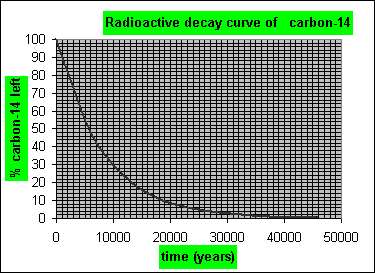
There is a belief that carbon-dating can be used to ascertain the exact moment something came from—and from any prior point in history—as if its method of insight were derived from Magical, ‘Delphilic’ sources. The truth is carbon dating, like all tools, is constrained by the exact properties that it derives its utility. To better explain carbon dating, think of your phone. At night, you charge it up so that the battery is full by morning. Then throughout the day, the battery slowly diminishes until it is dead or nearly dead, at which point you plug it back in to repeat the day. Without looking at the time—and knowing at roughly what time per day your phone runs out of battery—you could reasonably ascertain the time by looking at your phone’s battery life. If it is at 95%, it’s probably some time in the morning. If it is at 50%, maybe late afternoon. If it is at 2%, probably late at night. Carbon dating works similarly. C-14 decays into C-12, and we know roughly how much C-14 is in certain objects at the start since it is produced in the atmosphere constantly. Eventually all of that C-14 will decay into C-12, and since we know how fast that happens, we can predict how long that has been decaying for. The limitation comes from measuring outside the cycle. Returning to the phone metaphor, the battery might tell you how far into the day you are, but it is recharged at the end of the day, so it can’t tell you how many days that cycle has been going on for. And if you let it charge, die, and then never charged it again, it couldn’t tell you how long it’s been dead for. Carbon dating works similarly. The “charge” of C-14 is roughly 30,000 years, so once it’s decayed, that ratio will stay the same for a million, billion years. It can’t tell you how old it is past that. Additionally, just like the phone battery can help you determine roughly the time of day, it can’t tell you the minute or the second. Similarly, carbon dating can’t tell you the year or the month. Other methods of dating—like those that have been used to determine the age of the Earth’s crust—operate under similar constraints of resolution. They can tell you that the Earth is 4 billion years old, but with a discrepancy of a few million years. ↩